Every job below is one we do ourselves across Racine.
We frame new decks on footings poured below Wisconsin's 42-inch frost line, so the structure doesn't heave when the ground freezes and thaws. Joists go in at 16 inches on center, hung with galvanized or stainless hangers depending on the lumber you choose. You get a ledger board properly flashed against the house, not just lagged through the siding.
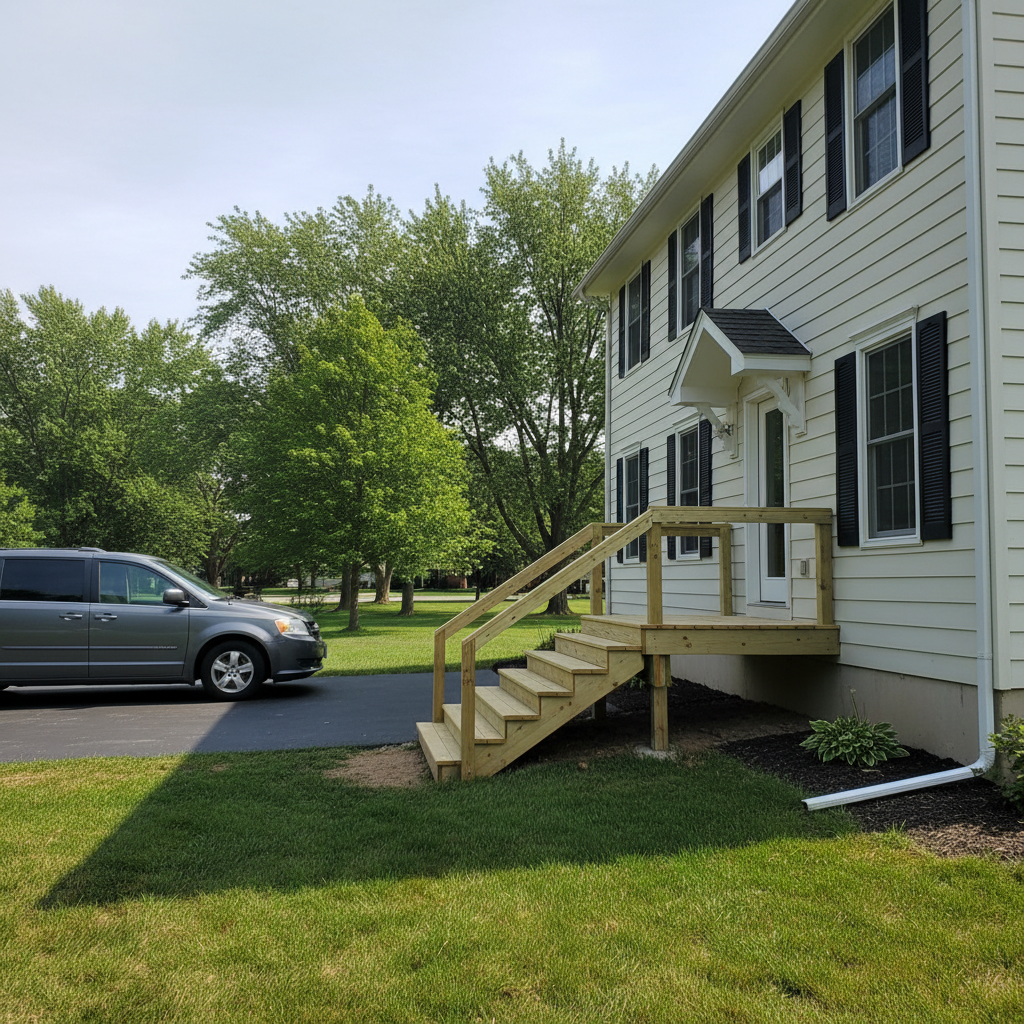
Loose railings, bouncy joists, and rotted ledger boards are the three calls we get most. We pull the deck boards to check the frame underneath before replacing anything on top, because a new board over a soft joist just fails again in a year. A snapped stair stringer or a popped post base usually gets fixed in a single visit.
Pressure-treated and cedar decks need a fresh coat of stain every two to three years or the wood grays, checks, and starts absorbing water at the end grain. We power wash at low pressure to avoid fuzzing the fibers, let the wood dry for a couple of days, then apply a penetrating stain instead of a film-forming one that peels. Composite decking skips this step entirely, which is one reason people switch.
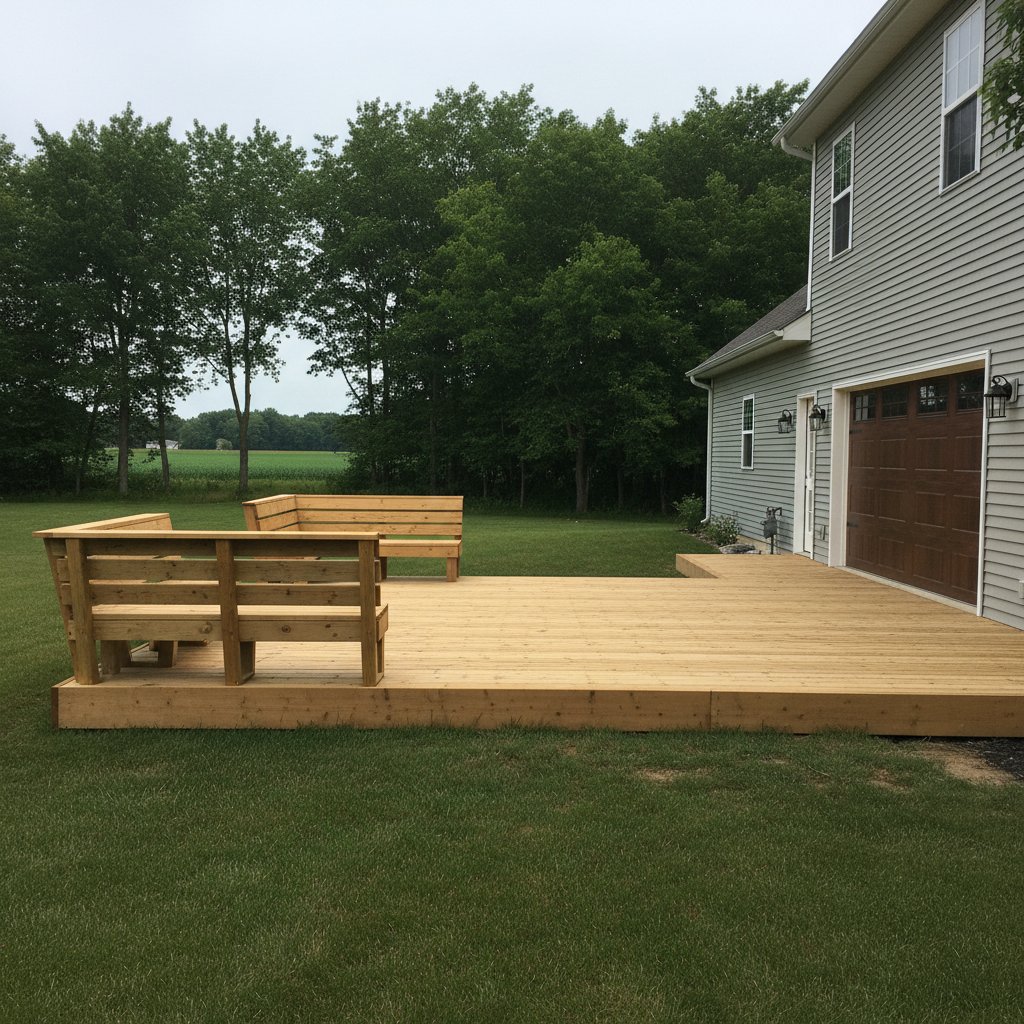
Multi-level decks, built-in bench seating, skirting to hide the crawlspace underneath, we draw it out before anyone picks up a saw. We'll tell you if a design idea fights against your lot's grade or your local setback rules. Stairs, rail style, and board pattern all get decided on paper first.
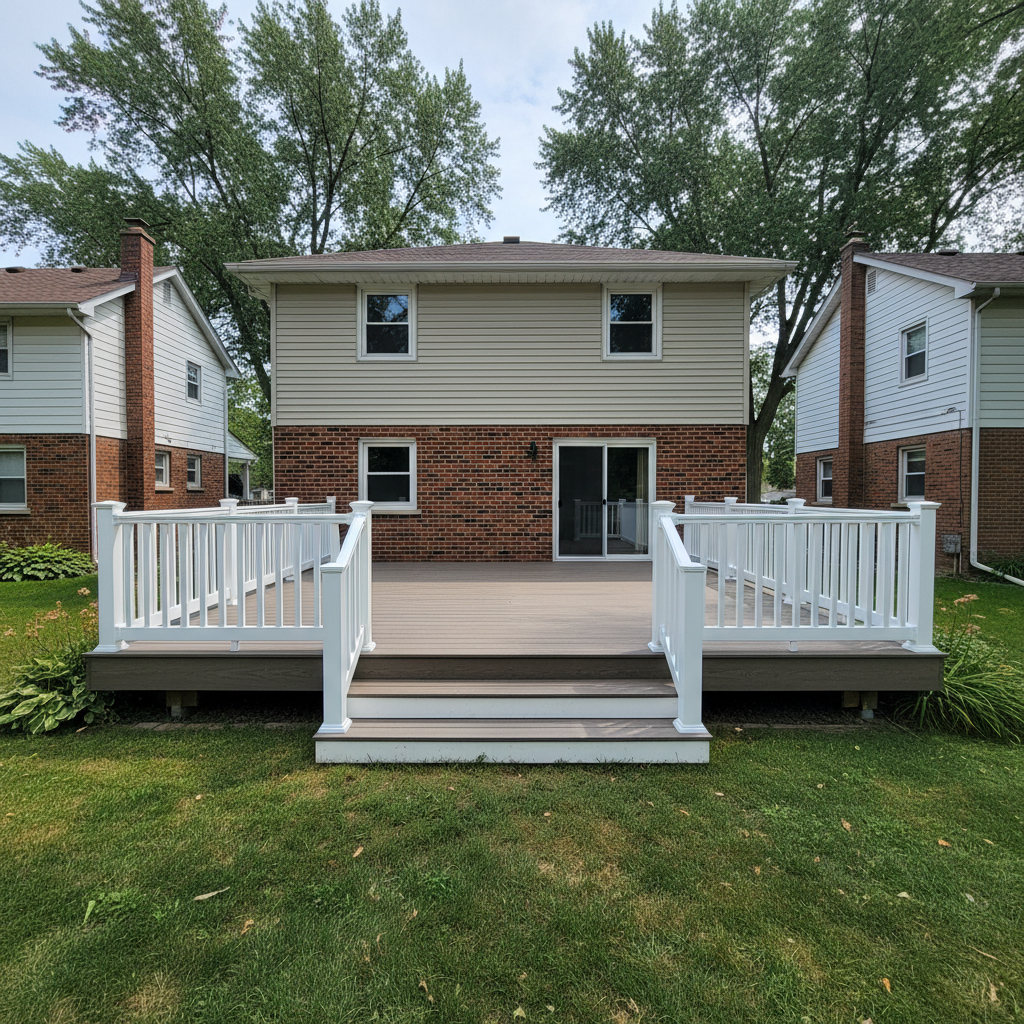
Composite boards cost more up front than pressure-treated lumber, but there's no sanding or staining, and most carry a 25-year fade warranty. The framing underneath still needs to be real lumber spaced correctly, composite doesn't fix bad joists. We install hidden fastener systems so the top surface stays clean, with no screw heads showing.
Wisconsin code calls for guardrails at 36 inches on most residential decks, with baluster gaps under 4 inches so a kid's head can't fit through. We replace wobbly posts by bolting through the rim joist with structural screws instead of toe-nailing, which is why most old railings fail in the first place. Cable rail and glass panel options are available if you want the view unobstructed.
If your frame is still solid but the decking boards are cupped, splintering, or gray, we strip the old boards and lay new decking over the existing structure. This costs a fraction of a full rebuild and takes a couple of days instead of a couple of weeks. We check every joist for rot while the old boards are off, before anything new goes down.
We build screened porches off the back of the house using the same footing and framing approach as an open deck, then frame in a roof and screen panels. It keeps mosquitoes and wasps out all summer without sealing the space up like a sunroom. Roof tie-in and flashing against the house is the part that separates a dry porch from one that leaks.
Old decks get torn out board by board, posts pulled, footings broken out or left in place if you're building over the same footprint. We haul everything away, so you don't need a dumpster sitting in your driveway for two weeks.
A pergola gives you shade and structure without a full roof, good for a deck that gets afternoon sun all summer. Covered decks tie into the house roofline and need proper flashing where the new roof meets the old one, or you're just building yourself a leak. Either option can be added to a deck we built or one that's already there.
Four steps, and no surprises in any of them.
You tell us what you want doing, we look at what is actually there, and we ask the awkward questions early.
In writing, itemised, free. If something might add cost later we flag it now rather than at the end.
Same crew throughout. We cover your floors, keep the dust down and tidy up before we leave each day.
You point out anything you are not happy with and we fix it before the invoice, not after.
Deck crews travel to every town on this list on a regular basis.
Questions that come up once a project is actually underway.
Describe the problem and we will tell you what it probably is. No obligation.